
The Proposal
Large VFX companies have become exceptionally good at delivering very large projects.At the same time, the number of smaller, creatively ambitious projects has exploded.
These projects increasingly go to boutiques—not because the work requires less talent, but because the operating model is different.
My proposal is simple:
Let's stop griping about schedules getting shorter, budgets getting smaller, and demands getting larger.Let's adapt. Let's build a new model that works together.
Queen would become a deliberately small laboratory - a VFX test kitchen. Our job isn't simply to complete projects, but document and refine the systems required to run a boutique VFX studio efficiently. Systems we’ve already deployed successfully to complete the biggest movie in America, and ones that we’ll discover in the coming months and years.
Framestore already invests heavily in R&D. Most of that R&D is technical—rendering, infrastructure, software, recruiting, pipeline development.
This would simply be another branch of that R&D effort.
Instead of asking "How do we render faster?" we'd be asking "How should a five-person VFX company actually operate?"
Every project becomes a chance to test a better workflow, a better hiring process, a better bidding strategy, a better client experience, or a better way of organizing a small team. The useful ideas get documented and fed back into Framestore.
Unlike most R&D, the projects themselves pay for the experiment.
If the model proves itself, it becomes repeatable in commercial markets that are too small to support a traditional Framestore office.
Large companies are good at optimizing existing systems. Small companies are good at discovering new systems.
Framestore gains:
- Exposure Exposure: An insurance policy against smaller boutiques undercutting the next generation of filmmakers and creatives, who will grow into full maturity in the next decade. Insulation against large-scale projects continuing to decline over the next decade. to a growing segment of the market in the form of profit share.
- A zero-cost operational R&D lab.
- Overflow Overflow: Yes, overflow work. But better characterized as an additional tool in Framestore’s toolkit to accept more work, or work that might be too small in budget or scope for Framestore. A hedge in Framestore's portfolio. capacity for projects that don't fit the traditional Framestore model.
- A talent pipeline for developing and interchanging a new type of artist and workflow.
- An operating model that could eventually be replicated in
multiple cities.
Multiple Cities: Likely cities with a substantial amount of work, but not large enough to support a traditional Framestore office.
Buying small office buildings could also be a long term plan to “lock in” the value that the VFX service provides. - Exposure to original IP in the form of backend deals.
- Brand Diversification Brand Diversification: I think of Framestore as being established, reliable, large, a bit old, and very British. That scale and legacy may actually work against Framestore for a younger, less traditional, growing segment of the commercials and features market.
Queen gains:
- Infrastructure.
- Business support.
- Sales.
- Stability.
- Mentorship.
The goal isn't to build another Framestore. It's to build something Framestore doesn't currently have.
Why Queen?
Queen is a 7 year old VFX boutique, started by Peter Timberlake.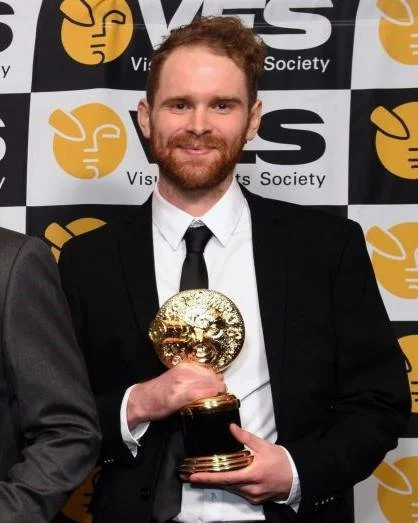 Peter Timberlake here. I started my career at Framestore ~10 years ago, and went on to form Queen 7 years ago.
At Framestore, I was lucky to be awarded a VES award for Best Compositing in a Commercial for my work with Apple and Spike Jonze. And was part of the team awarded a Primetime Emmy for Free Solo 360. I served as composer and a compositing technical director.
Since then I’ve worked at Weta FX as a Senior Compositor and at the Mill as a Compositing Supervisor.
I’ve served as Comp Supervisor for John Wick 4, Emancipation, The Old Guard 2, along with countless commercials with Apple, Amazon, Meta, Lucasfilm, Bungie, Google, Salesforce, etc.
I served as VFX supervisor for Obsession, Shadow Force, The Long Walk, and countless commercials too.
Queen has just completed all VFX for Obsession
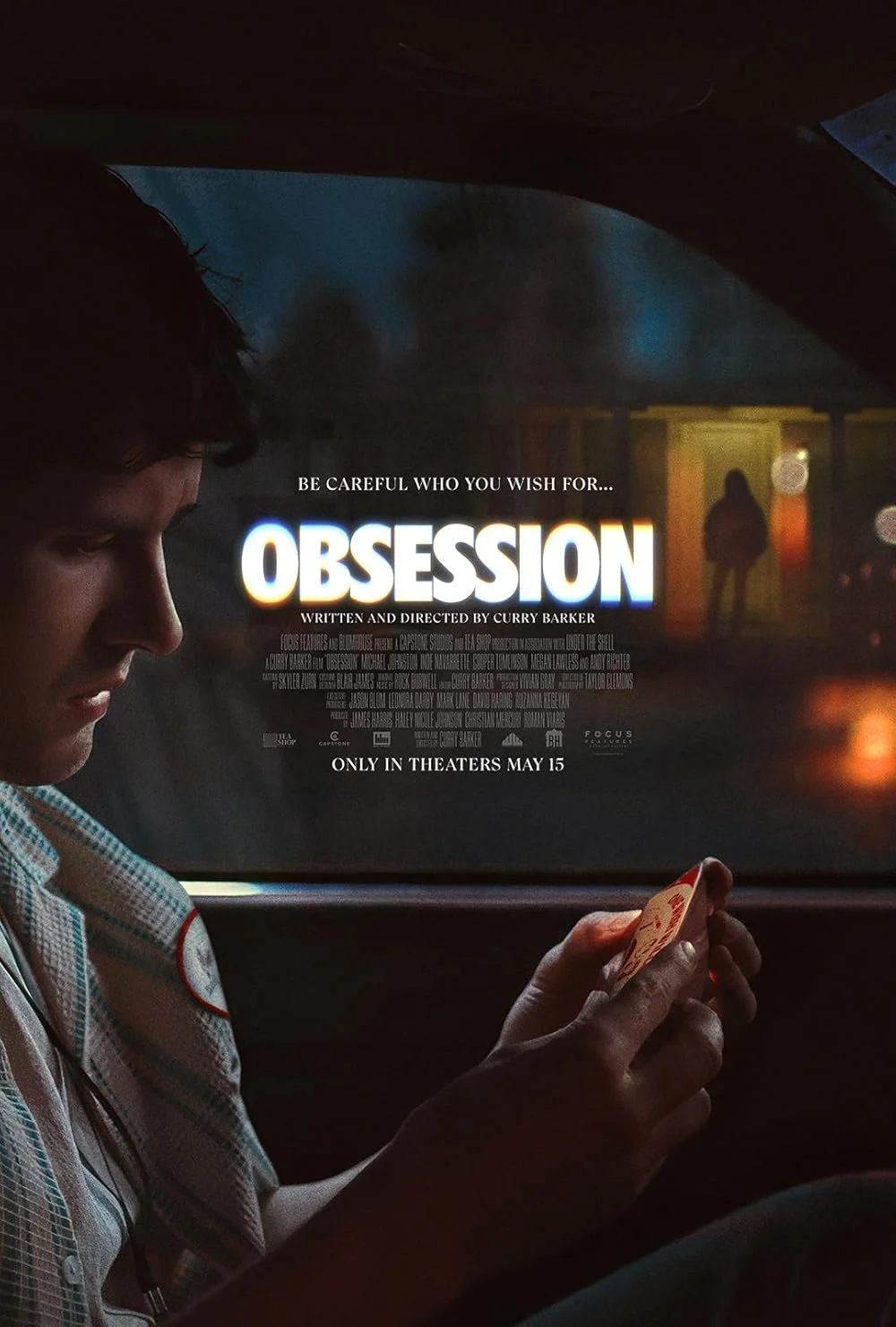 Queen handled all VFX on Obsession, 135 shots, most of them nearly ubiquitous as memes on social media.
Peter served as VFX supervisor.
We worked for a total of 8 months on the film, saw its TIFF debut through to its theatrical release.
We currently have no NDA’s associated with our work on the project. - currently at $430M at box office - one of the biggest indie successes of the century.
Obsession is proof that our little-studio model works on the largest scale.
Obsession isn’t our first big success - have a look at some of the features Features: Queen has handles sequences on
John Wick 4 (Lionsgate [Gloabal Theatrical Release])
The Long Walk (Lionsgate [Gloabal Theatrical Release])
Shadow Force (Lionsgate [Gloabal Theatrical Release])
and The Old Guard 2 (Netflix). , dozens (hundreds?) of commercials commercials: We've worked with all of the largest, most valuable companies in the world: Apple, Meta, Amazon, and all of the rest. , and software software: starting in 2018, we started building a shot management platform called Tarantula. Tarantula facilitates outsourcing roto and paint work, but also included a render manager and conform tools for Premiere and Resolve. The project has been wound-down as of 2022. Learn more at petertimberlake.com/tarantula and hardware
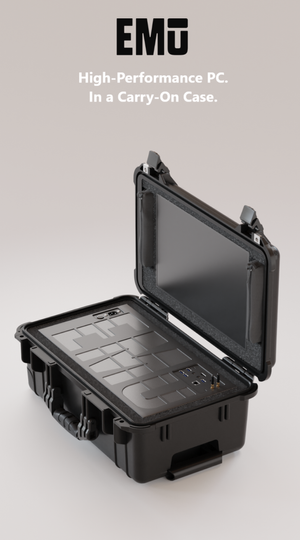 At Queen we favor a local, non-cloud workflow when possible. That drove us to innovate a portable, high-performance PC, capabale of being carried onto a filght. Learn more about EMU at emu.computer.
R&D efforts we’ve undertaken.
At Queen we favor a local, non-cloud workflow when possible. That drove us to innovate a portable, high-performance PC, capabale of being carried onto a filght. Learn more about EMU at emu.computer.
R&D efforts we’ve undertaken.
Large organizations are structurally bad places to discover radically different operating models.
Queen already exists as a functioning boutique. We have no debt, no investors, and no additional stakeholders. We can be quick and decisive.
Starting from zero inside Framestore would take years, cultural buy-in, carry political risk, and would be impossible to gurantee the success Queen has already had.
Why Framestore?
VFX companies are unusual businesses. They're service-oriented, operationally complex, and scale dramatically from project to project. That makes them difficult for traditional investors to understand.Rather than seeking capital alone, we'd rather partner with a company that already understands this business inside and out, and already has many of the resources we'd need.
The investment we're looking for is far less about cash than experience, infrastructure, and strategic alignment.
In Queen's seven years, we've earned top-tier credits with top-tier clients. But we've largely done it by punching above our weight on projects that didn't always reflect the value of the work.
We'd partner with Framestore not to change the quality of our VFX, but to improve the quality quality: In this case, quality refers to the relationship between the value we create and the value we capture.
We already deliver the level of work Framestore is known for. The goal is to do that work on projects where the business is as strong as the creative. of the opportunities we pursue.
Obsession crystallized this for me.
Queen delivered all of the film's VFX on one of the most talked-about releases in recent memory. Creatively, I'm enormously proud of what we accomplished.
Commercially, we left a tremendous amount of value on the table—not because we couldn't do the work, but because we weren't optimized for everything surrounding the work: contracts, positioning, marketing, long-term relationships, and business development.
That's exactly why I think Framestore is the right partner.
Queen has spent seven years learning how to build and run an exceptionally efficient boutique.
Framestore has spent decades building one of the world's great VFX businesses.
Together, we can build something neither of us currently has.
How much cash would we need?
Queen is already a profitable business.This proposal isn't about funding a startup—it's about accelerating an operating model that's already proven itself.
Because of that, the capital requirements are relatively modest.
Direct investment for specifically prescribed usage:
- A one-time
office opening allowance
office opening allowance: To establish a small, client-facing office in Los Angeles.
The goal wouldn't be to build a large facility, but an intentionally small, beautifully designed space that reflects the kind of company we're trying to build. -
infrastructure improvement
infrastructure: Machines, storage, and software where appropriate.
The larger investment isn't financial—it's access to the business infrastructure Framestore has already spent decades building. allowance. -
Sales-focused Executive Producer
Sales-focused Executive Producer: This person's role would be the crucial request from Queen. This person would be resonposble for handling lots of the "business" side of the company. Finding leads, submitting bids, writing contracts, and generally liasing with Framestore.
This person could come from within Framestore or be hired externally.
We'd want to make that decision together. -
Staff Salaries
Initially, Peter Timberlake and the new Sales EP.
Peter's compensation would almost certainly be covered by existing studio earnings, and we're happy to provide several years of financials to establish realistic expectations. -
Business Operations
Payroll, HR, legal, insurance, and the operational support that allows a small studio to focus on doing great work instead of reinventing administrative infrastructure.
Queen would operate under the Framestore umbrella, leveraging systems that have already been proven over many years. -
Marketing Support
Case studies, awards submissions, and social media.
This could take the form of a prescribed number of hours each week from Framestore's existing marketing team, or an agreed allowance to retain an external marketing specialist.
And what does Framestore get in return?
- Exposure to a growing segment of the market through a 40%
profit share.
Studio earnings would first cover project expenses, including salaries and repayment of any initial investment.
Remaining profit would then be distributed:
50% to Queen
10% shared equally among Queen employees
40% to Framestore. - A low-cost operational
R&D labratory.
The primary goal of this partnership is to discover, test, and refine the best operating model for a modern boutique VFX company.
Every production becomes an opportunity to improve efficiency, profitability, client experience, and team sustainability.
Successful ideas are documented, measured, and shared back into Framestore.-
Technology
Rather than committing to any particular software ecosystem, we'll continually evaluate technology according to a simple question:
"What's the lightest-weight, lowest-cost solution that reliably delivers the required quality?"
Sometimes that may mean established industry software. Sometimes it may mean newer tools or AI-assisted workflows.
The objective isn't to champion specific software—it's to continually improve the economics of boutique VFX without compromising quality. -
Workflows
Every project becomes an opportunity to test better ways of working.
When should automation replace manual work?
When is specialist labor worth the additional cost?
Where are the bottlenecks in communication, review, rendering, delivery, or project management?
Rather than assuming today's workflow is optimal, we'll continually measure, refine, and document better approaches. -
Management Playbook
Small companies require people to wear many hats.
We'll continually develop and document management systems that enable artists to succeed across multiple responsibilities while maintaining a healthy, sustainable workplace. - Client Experience Playbook We'll refine repeatable approaches to communication, expectation setting, approvals, and project management so clients receive a consistently high-quality experience regardless of project size or staffing.
-
Bidding
We'll work alongside Framestore to continually improve our approach to bidding and project evaluation.
Every project becomes another data point that helps refine pricing, staffing, scheduling, and project selection for boutique work. -
Institutional Knowledge
Every project teaches something.
Our goal is to ensure those lessons remain with the organization, rather than with individuals.
We'll continually refine how operational knowledge is documented, searched, and shared so each solved problem benefits every future project. Cruciallly, this database is AI searchable and can synthesize details from multiple projects into a single nuanced response.
-
Technology
Rather than committing to any particular software ecosystem, we'll continually evaluate technology according to a simple question:
They would inherit a proven operating system: documented workflows, hiring practices, management methodology, bidding frameworks, operational playbooks, and an evolving body of institutional knowledge developed through real productions. operating model that can be deployed wherever the opportunity exists.
What would be the parameters?
We'd propose running this partnership as a 24-month incubation period.Twenty-four months should provide enough commercial and feature productions to meaningfully evaluate the model across different clients, budgets, and production environments.
Success would be defined by profit, but not profit alone.
We'd evaluate the experiment according to three broad criteria:
- Profitability
-
Operational Knowledge
Comprehensive documentation of the systems developed throughout the incubation period, including project metrics, staffing data, operational decisions, workflow evolution, management practices, bidding methodology, and post-mortems.
The objective isn't simply to record what happened, but to identify what consistently produces better outcomes.
At the conclusion of the incubation period, assuming agreed commercial and operational goals have been achieved, Framestore would receive the right of first refusal to acquire ACQUISITION
Acquisition would represent the beginning of the next phase rather than the end of the experiment.
Alongside acquisition, we'd propose a second round of investment to launch an additional boutique office using the operating model developed during the incubation period.
If the model proves successful, each successive office should become faster, lower-risk, and less expensive to establish than the one before it. up to a 50% ownership stake in Queen.
Operationally, what defines the VFX company we're trying to build?
The goal of our test kitchen would be to find the boutique of the future. With that said, here's what's been working for us at Queen:-
Deliberately Small
DELIBERATELY SMALL
Our current hypothesis is that the optimal boutique team is likely between three and five people, though one objective of this experiment is to discover precisely what that number should be.
Rather than maximizing headcount, we'll seek to maximize leverage—building the smallest team capable of consistently delivering exceptional work while maintaining a healthy, sustainable business. -
Multi-Disciplinary
MULTI-DISCIPLINARY
Rather than specializing every operational responsibility into separate roles, we'll intentionally develop artists capable of owning larger portions of a project's lifecycle.
A compositing supervisor might also supervise on set, prepare project media, conform timelines, and complete final composites.
Likewise, a Sales EP might generate leads, prepare bids, manage client relationships, produce projects, and oversee delivery.
The objective isn't simply reducing payroll. It's reducing dependencies.
Every handoff introduces delay, context switching, communication overhead, and opportunities for misunderstanding.
We'd rather empower capable people to complete thirty-second tasks themselves than build organizations where those same tasks wait in someone else's queue. -
Documentation-Driven
DOCUMENTATION-DRIVEN
As individuals take on broader responsibilities, documentation becomes increasingly important.
Every workflow, decision, and operational process should be clearly documented, easily searchable, and continually refined.
Our long-term goal is for every member of the company to confidently step into unfamiliar responsibilities using a shared operational playbook built through real production experience. -
Operationally Efficient
OPERATIONALLY EFFICIENT
Every operational decision should begin with the same question:
"How can we achieve the same result with less complexity?"
That applies equally to technology, staffing, infrastructure, workflows, and purchasing decisions.
Whenever possible, we'll favor simple, proven solutions over custom-built ones, local infrastructure where appropriate, practical automation over manual repetition, and hiring people with unusually broad capabilities.
The goal isn't to minimize spending—it's to maximize the amount of value created per dollar spent.
What's the End Game?
My vision for this partnership is to continually discover, codify, and refine the best operating model for a modern boutique VFX company.The objective isn't simply to build one successful studio.
It's to develop an operating system that can be confidently replicated wherever the opportunity exists.
-
Replicate the model
REPLICATE THE MODEL
As the operating model matures, we'd selectively establish additional offices in markets with strategic advantages—cities capable of supporting boutique VFX businesses but unlikely to justify a traditional Framestore office.
The goal is thoughtful expansion, not rapid expansion.
-
Create long-term assets
CREATE LONG-TERM ASSETS
Where practical, we'd prioritize owning small office spaces rather than leasing them, allowing the business to build equity over time.
These offices should be intentionally small, beautifully designed environments that reflect the quality of the work produced within them.
We'd take inspiration from high-end, low-capacity cocktail bars: intimate spaces where every detail contributes to the client's perception of craftsmanship. -
Create creative partnerships with IP Ownership Share Contracts
CREATIVE PARTNERSHIPS WITH IP OWNERSHIP SHARE CONTRACTS
We'll continue exploring relationships with ambitious filmmakers working outside traditional pathways, particularly directors emerging from platforms like YouTube, Instagram, and TikTok.
The success of projects like Obsession suggests that exceptional opportunities increasingly originate outside established studio systems.
Where appropriate, we'd pursue backend participation in projects whose long-term upside justifies the investment. -
Build a company artists want to stay at
BUILD A COMPANY ARTISTS WANT TO STAY AT
Operational efficiency should benefit everyone—not just the bottom line.
We'd continue building profit sharing into the business, discourage unnecessary overtime, provide generous vacation policies, and create an environment where talented people can build long careers.
The goal isn't simply to make the company more profitable; it's to make it more sustainable. -
Continuously improve profitability
CONTINUOUSLY IMPROVE PROFITABILITY
Our ambition is to continually increase project margins through better operations rather than by reducing quality or overworking people.
Higher margins create the freedom to invest in staff, pursue more interesting work, and become increasingly selective about the projects we accept.
Operational excellence should make all of those things possible simultaneously.
The VFX industry is always changing.
Large companies have become exceptional at delivering enormous projects.But the next generation of filmmakers and creative companies will increasingly need something different: smaller, faster, more adaptable teams capable of delivering world-class work without the traditional overhead.
Queen is already a working example of that model.
For seven years, we've built a boutique that has competed far above its size — from global brands to major feature films, culminating in completing all VFX for Obsession.
The question is no longer whether this model can work. It's been working for us for the last 7 years.
The question is how to build the playbook system that allows it to scale. And our last hurdle is injecting the fuel it needs to thrive.
That's where Framestore comes in.
We aren't proposing building another Framestore.
We're proposing building something Framestore doesn't currently have: a deliberately small laboratory for discovering the future of boutique VFX.
Queen brings the agility, experimentation, and first-principles thinking of a small studio.
Framestore brings decades of experience, infrastructure, relationships, and operational excellence.
Together, we can create more than one successful boutique.
We can develop a repeatable model for a new generation of VFX companies — one that expands Framestore's reach, creates new opportunities for artists and filmmakers, and captures a growing part of the market.
The model has already been proven.
We're inviting Framestore to help define what it becomes.